Showing posts with label Finance Bill. Show all posts

Monday, 13 January 2020

YES Bank declines 8% as it scales down fundraising plan to Rs 10,000 crore

YES Bank board has rejected $1.2 billion offer by Erwin Singh Braich and SPGP Holdings.

YES Bank

Latest News : Shares of YES Bank slipped 8 per cent to Rs 41.20 on the BSE on Monday in the early morning deals after the private sector lender scaled down its fundraising plan substantially to Rs 10,000 crore, from nearly $2 billion approved by the board in November, as it continued with its struggle to get investors. The stock ended 5 per cent lower at Rs 44.80 on Friday.
YES Bank board has rejected $1.2 billion offer by Erwin Singh Braich and SPGP Holdings. At the same time, the bank’s board has approved fund raising of up to Rs 10,000 crore.
“The Bank has received an updated proposal from the investor extending the validity of its offer until January 31, 2020 for the Bank’s consideration and further evaluation. However, the Board has decided not to proceed with the offer,” YES Bank said in an exchange filing on Friday after market hours.
Meanwhile, the board has approved for raising of funds upto Rs 10,000 crore, in one or more tranches, on such terms and conditions as it may deem fit, by way of issuance of securities including but not limited through Qualified institutional placement (QIP)/ Global Depository Receipts (GDRs)/ American Depository Receipts (ADRs)/ Foreign Currency Convertible Bonds (FCCBs)/ or any other methods on private placement basis.

Updates on Upcoming Event → Budget 2020

Friday, 10 January 2020

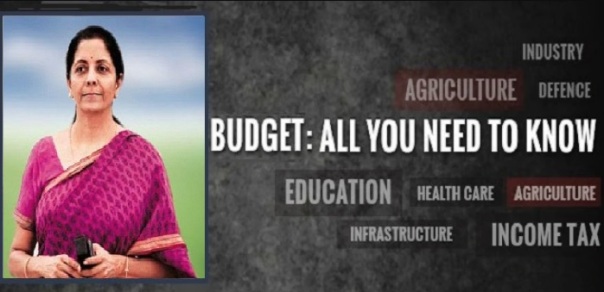
Union Budget 2020 : Everything You Wanted To Know About The Budget

The Union Budget also referred to as the annual financial statement is actually a ledger about the income and expenses of the Union government of India. The budget also details expected expenses for various projects and expected revenue from direct and indirect taxes.

Nirmala.jpg

After the Finance Ministers tables the budget in the Parliament, it is also necessary to get the budget passed in both houses of Parliament before it can be implemented. The budget is an extremely significant exercise for the economy of the country. Yearly accounting of income and expenditure of the government, review of the financial health of the country and the resulting transparency and subsequent course correction helps to keep the country’s economy on track.

Union Budget history

  • India’s first Budget was presented on February 18, 1860, by James W Mahalanobis. R K Shanmukham Chetty, the first finance minister of independent India presented the Union Budget on November 26, 1947. In 2001, the then finance minister Yashwant Sinha broke the colonial practice of presenting the Budget in the evening and started the tradition of reading it out from 11 am. Indira Gandhi became the first woman finance minister to present India’s Budget in Parliament in 1970. Nirmala Sitharaman, who was appointed as the finance and corporate affairs minister on May 31, 2019, is the second woman to have presented the Budget on July 5, 2019.
More Updates → Union Budget 2020
Classification of Different Types of Budgets
  • The three types of budget are deficit budget, balanced budget and surplus budget. As the name suggests the most ideal budget would be a balanced budget. In this type of budget government's expenditure is equal to the expected income. Many economists believe that a balanced budget would be an ideal budget and can ensure economic stability. Deficit budget is presented when the government's expenditure is more than its revenue collection. Although not the most ideal scenario but most of the times due to various reason deficit budgets are tabled especially in developing countries. In developing and under-developed countries the government’s spending on social welfare scheme and increased public spending to stimulate the economy are major causes of a deficit budget. Surplus budget is when the government’s projected revenue is more than its expenditure, the same happens mostly in rich countries and economies.
Live Updates → Budget 2020

Union Budget 2020

  • Finance Minister Nirmala Sitharaman is set to present the Budget 2020 on February 1. The Union Budget is an estimate of income and expenditure of the government for a set period of time. It is an annual financial report of India. The Budget also documents how much money the Centre could expect to raise in the coming fiscal and how and where it would spend the money. The Budget is prepared by the Ministry of Finance in consultation with other ministries, states and experts. Ministry officials hold discussions with non-governmental organisations (NGOs), private sector and other stakeholders before preparing the Budget.
As per Article 112 of the Indian Constitution, it is mandatory for the government to present this annual statement. The Union Budget is classified into Capital Budget, Revenue Budget and Expenditure Budget.


Follow Quora Space Union Budget of India

Thursday, 15 March 2018

In 30 minutes Lok Sabha clears Finance bill, 218 amendments without debate

The bills were the contentious Finance Bill, 2018, and the Appropriation Bill, 2018.

finance bill
Business News : In 30 minutes on March 13, 2018, Parliament’s lower house, the Lok Sabha, passed without debate funding demands from 99 Indian government ministries and departments, including two bills and 218 amendments.
As many opposition members of Parliament (MPs) protested, Sumitra Mahajan, speaker of the Lok Sabha–controlled by the Bharatiya Janata Party (BJP)–used a parliamentary procedure called the “guillotine”, which empowers her to pass grants without discussion.

Among the demands passed:

  • Controversial foreign funding to political parties, which will allow them to escape scrutiny with retrospective effect for 42 years.
  • Salary hikes for members of parliament, the president, and state governors.
  • An Appropriation Bill passed by voice vote on March 14, 2018, which allows govt to draw Rs 80,000 crore from the Consolidated Fund of India (Rs 57 lakh crore), the government’s total revenue.
  • A long-term capital gains tax, which has received mixed reactions since it was announced in February. Investors will now have to pay 10% tax on profits from shares sold, even if they have had these shares for more than a year.
The bills were the contentious Finance Bill, 2018, and the Appropriation Bill, 2018.
No bills had passed over the last eight days, with the Opposition protesting the Rs 11,000-crore Punjab National Bank scam, special compensation packages for Andhra Pradesh and Telangana, and defacement of the Periyar statue in Tamil Nadu.
On Wednesday afternoon at 12.35pm, speaker Sumitra Mahajan applied the guillotine to pass the budget 2018 in time for the new financial year, which starts on April 1, 2018. At the start of the week, the BJP had issued a three-day whip to its members to be present in the House. The BJP-led National Democratic Alliance government holds an absolute majority in the Lok Sabha.

More on  → Finance Bill 2018